Jūrmala

There’s a phrase in English — “walking on air”. It describes those rare moments when you leave a place full of energy, optimism and possibility.

That’s how I felt after three days in Jūrmala, Latvia, at the REScoop annual gathering.

It was my first gathering as REScoop President, so I arrived carrying a fair amount of stress. But colleagues from across Europe had worked incredibly hard to plan every detail and create something thoughtful, welcoming and purposeful. I left with a few personal reflections.

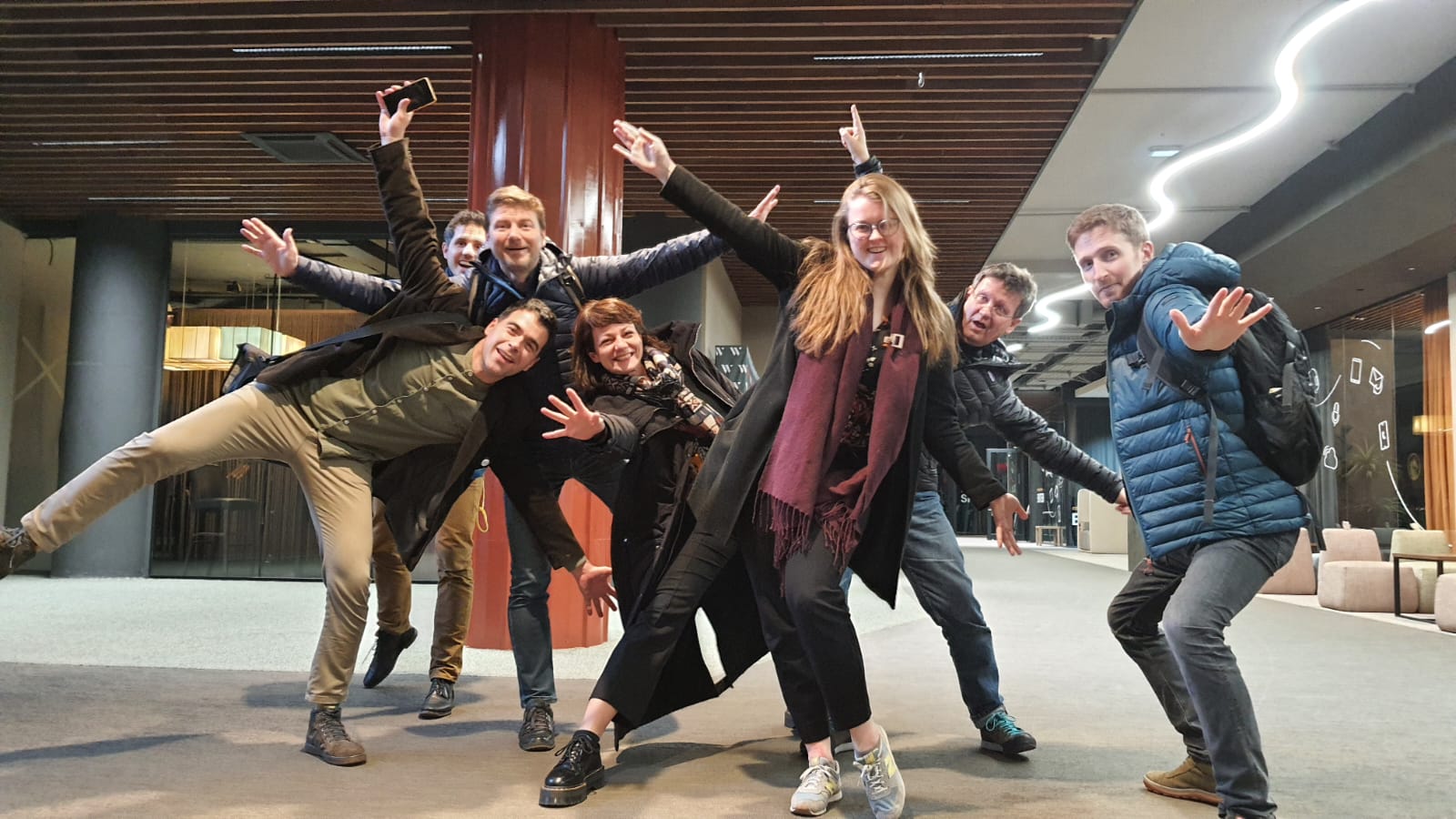
The event focused on serious issues: climate breakdown, European energy security, and growing political hostility towards cooperation and climate action. But at the same time the atmosphere was remarkably positive. Look at the photographs from the gathering — people are laughing, debating, learning, sharing experiences and clearly enjoying being together. There’s warmth and affection between people, alongside the seriousness of the work.

One thing stood out very strongly to me: diversity really is a source of strength. The people organising and attending came from many different countries and backgrounds, with different experiences and perspectives. There were people of different ages exchanging ideas, and crucially there was space for quieter voices to be heard.

I think the strong emphasis on inclusion and gender empowerment genuinely changes the atmosphere at these events. People feel they can contribute — and that matters especially when many participants are operating in a second or third language. Shared spaces should not be dominated by older, more confident, male native-speakers.

Representatives came from countries with very different political realities. In some places governments actively support community participation and the energy transition. In others, governments have effectively been captured by fossil fuel interests and are openly hostile to community energy. The movements in those countries are often smaller, but they also include some of the most inspiring individuals — people continuing to organise, advocate and build despite considerable pressure.

The energy system itself is changing far faster than many people realise. Rapidly falling costs for renewables and storage are transforming global energy systems, not only in the developed world but increasingly across the Global South as well. In some places countries appear to be moving directly towards decentralised energy systems, in much the same way they adopted mobile communications without first building extensive fixed-line networks.

Climate breakdown remains a central driver for change, but more people are also recognising how fragile and brittle highly centralised, just-in-time economies have become. A more resilient Europe will need decentralised energy generation combined with greater local ownership. Local ownership not only increases support for projects, it also ensures more of the economic benefit stays within local communities.

I was particularly struck by the level of innovation taking place within community energy organisations. Som Energia, Enercoop and Ecopower are all developing technologies, services and tariffs that allow their members to become active participants in the energy system rather than passive consumers. Austrian colleagues spoke about how regional agencies are bringing together public, private and community organisations to manage energy more intelligently and collaboratively.

We saw plenty of photographs of solar roofs, but community energy is now extending well beyond electricity generation. Communities are increasingly involved in home renovation, mobility and district heating — all essential if Europe is to achieve deeper reductions in energy use. Dutch colleagues described impressive progress working with local authorities on district heating systems owned by local people.

Some countries were strongly represented, including Belgium and France, while several countries attended for the first time. Ukraine had a significant presence and spoke powerfully about its own energy transition under extremely difficult circumstances. At the same time, some Scandinavian countries were surprisingly absent.

Finally, what united the gathering was a shared understanding of what community and local energy actually means. The European definition of energy communities provides an important foundation, and the recent European Commission publication on the Citizens’ Energy Package places energy communities much closer to the centre of Europe’s future energy system.

So I left Jūrmala feeling positive and hopeful.

The transition we need is immense. But after spending time with these communities, it also feels increasingly achievable.

European Commission – Citizens’ Energy Package

Tagged with: , ,
Posted in Uncategorized

Personal climate journey

These days I work on addressing climate breakdown. But like many (most?) people the work and private lives intersect. We’ve tried to live sustainably – but at the same time enjoy the benefits of 21st century technology. That’s a deliberate choice. We will not convince many people of a climate transition if we suggest it means living cold and dark houses for example.

Over the last decade we’ve gradually renovated our house. Typically when something needed replacement we made an energy efficient choice. We fitted a heat pump when the boiler failed, put in more insulation when the roof was repaired and fitted solar panels whilst the scaffolding was up.

Each year we do something. Two years ago we fitted electricity in our garage and we bought a second hand electric car. Earlier this year we replaced our gas hob with an induction model (it’s been great and we wonder why we didn’t do it sooner). We removed the gas supply as we no longer use it.

Last week we installed a home battery. This means much more of the electricity from our roof now gets used in our house. Even on duller summer days and with our small solar array we are typically now independent of the grid. It’s just a small box outside the house, we are hardly aware of it being there.

There’s something in this. Governments think of multi-billion pound schemes which take decades to complete. There’s obviously a place for some of that. But at the same time, if we can reduce our domestic energy demand and energy bills by 75% and still live in a warmer, brighter, more comfortable homes, or drive cars that are both quieter and cheaper too run, that’s surely also part of a solution.

Posted in Uncategorized

Recent reading

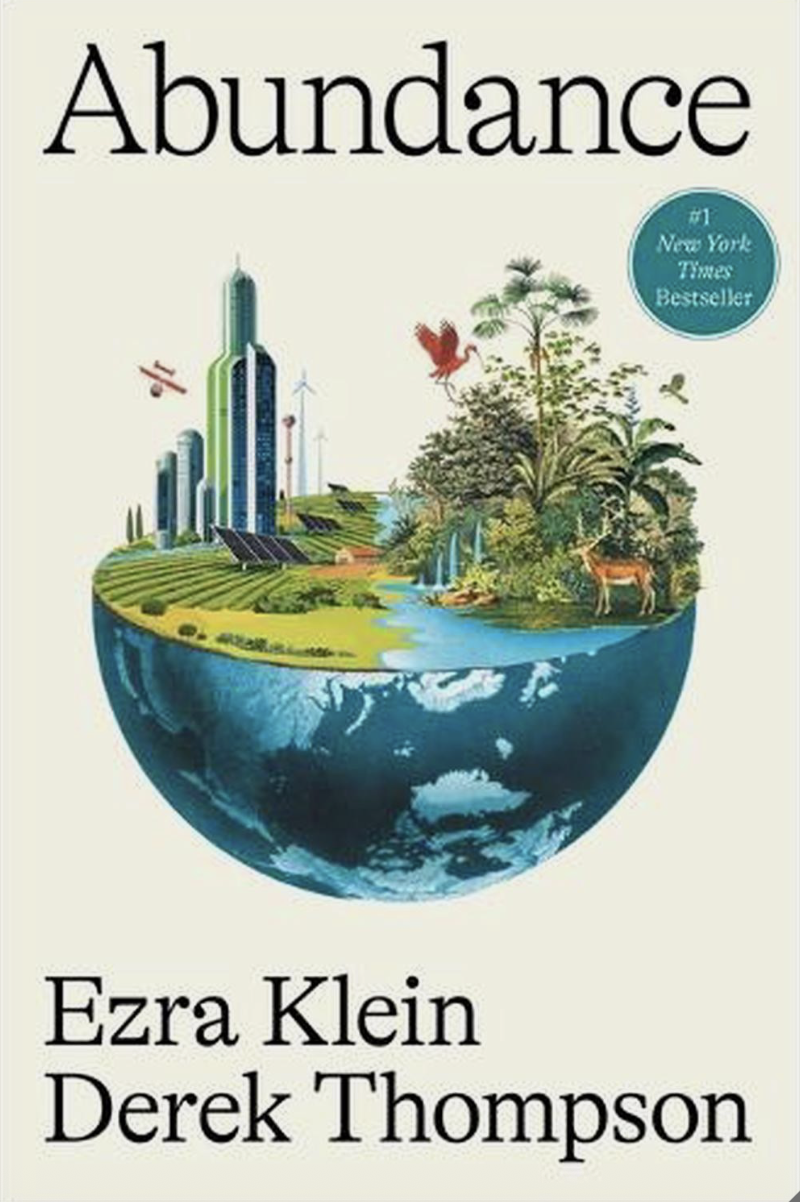
I usually have a couple of books on the go at any one time. I recently finished “Abundance” by Ezra Klein and Derek Thompson which I’d recommend. It looks at why the modern state has struggled to deliver basic services, from housing to economic growth. Written from a US perspective it certainly makes sense when you look around the UK, exploring how California has struggled to build housing or high speed rail. I certainly agreed that regulations developed with the best of intentions have increasingly blocked or at best increased the costs of infrastructure developments (think the £100m bat tunnel for HS2 in the UK).

On a different note I finished Ruchir Sharma’s “What went wrong with capitalism”. Like Klein’s book I found parts I agreed with and other sections I didn’t, which is probably a good thing. Its important to reflect on ideas one doesn’t normally agree with.

Which takes me to my current reading – “The ideological brain” by Leor Zmigrod, which explores the extent to which our minds accept different perspectives. It strikes me this research is important when thinking about messaging on issues like climate change – and how we talk to people who have different perspectives.

Posted in Uncategorized

Para for Cuva

I was exploring Deezer this week and some new musicians. One of the great advantages of the various streaming services is you can find artists who are not on mainstream media. For several years my favourite music has been from Germany with its different electronic musicians. I came Para for Cuva and particularly loved his recent album Mimose.

Posted in Uncategorized

Krakow

Climate breakdown is a serious threat, I believe that over the coming decades it will change more of our daily lives that we realise. We all have a responsibility to do our part.

I was hugely humbled when in May we were re-elected to the REScoop board President at our annual meeting in Krakow. A week later the board agreed I would serve as president for the coming four years, alongside a brilliant colleague (Ilonka Marselis) who will be vice president.

We’ve got a busy four years ahead of us. There will be a new EU budget, and we need to ensure climate policies across all of Europe put citizens at the heart of the energy transition.

Posted in Uncategorized

Community energy can be joyful

Working with community energy groups is hard work and really serious, but it’s also a load of fun and a great way to meet wonderful people. As way of example I give you a photo from the end of a recent meeting in Zagreb…

Posted in Uncategorized

Social media (the long goodbye)

I’ve deleted my Facebook and Twitter accounts. There are some people I really value following, but I’ve been increasingly unhappy with the whole social media model. I’m not convinced they are a power for good in society any more and so I don’t feel I want to be part of them.

The companies certainly make it hard to sign off, the delete commands are buried in various sub, sub menus, which in a way made me more determined to continue the process. I’ve kept LinkedIn going for now.

Posted in Uncategorized

Belgrade

Community energy can be difficult, but establishing co-operative energy groups in some countries can be harder than most. I recently visited the inspiring team at Elektropionir in Belgrade. A truly inspiring and wonderful group, battling a system that’s dominated by fossil fuel companies. I felt distinctly humbled.

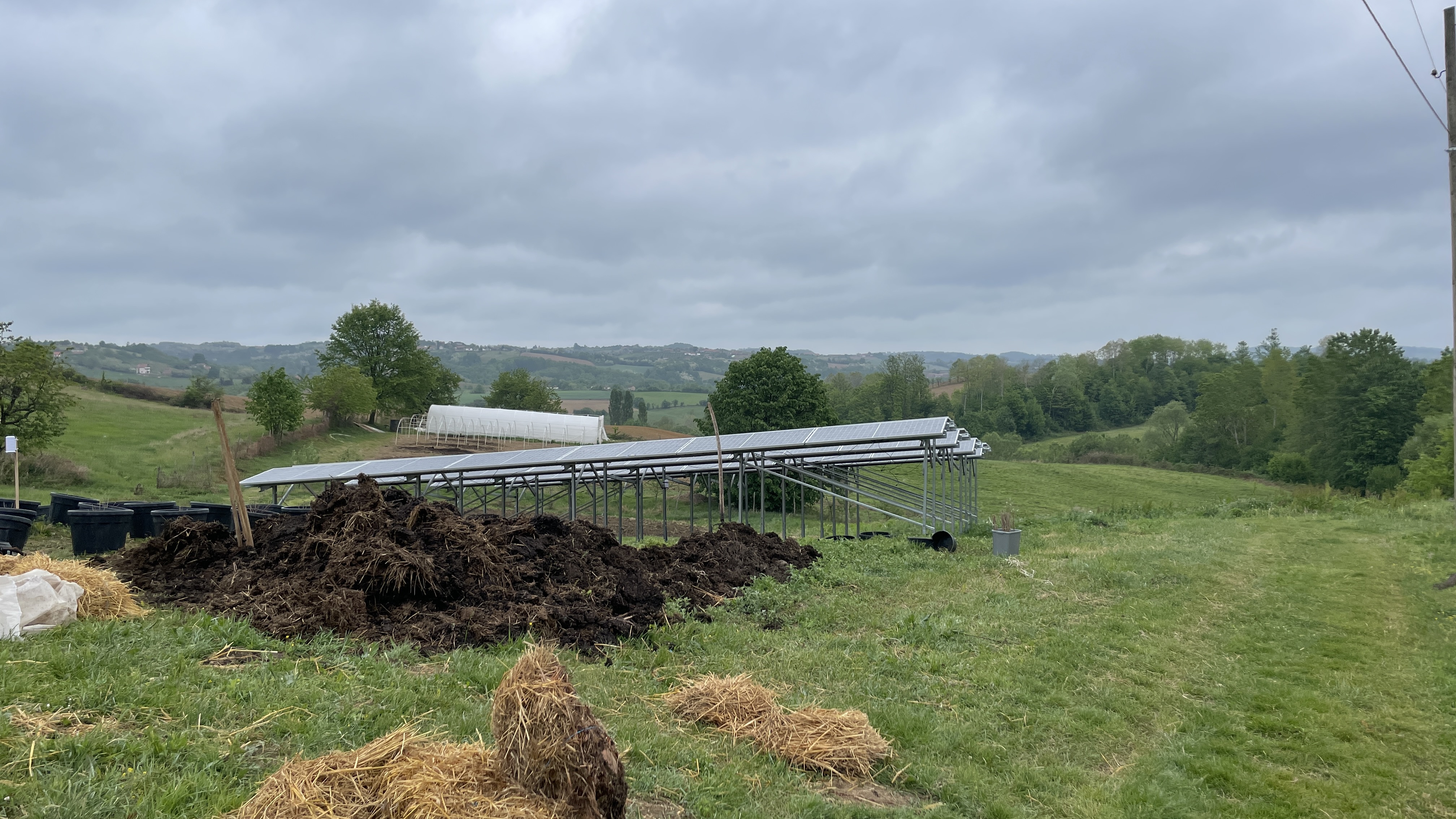
I saw three projects that really inspired me, the first self-consumer solar roof (something that would be simple in the UK), then a fantastic school headteacher and finally a young organic farmer. Just humbling.

Posted in Uncategorized

Projecto Novas Descobertas

We recently visited an inspiring project, an education centre, organic farm and eco camp. Located in the marshland close to Lagos in Portugal. Established by a Portuguese/Canadian couple 30 years ago. It was celebrating its birthday, and had a stall in the local Saturday Farmers’ Market – which is how we learned about the centre and its open day.

Sometimes you arrive somewhere and you can feel a place has a genuine warm vibe. It’s how people working there are treated, and the care given to simple things like food for guests. We certainly felt that on the visit, and we learned a lot about Portuguese concerns about climate breakdown.

The other visitors were disparate. We’ve come across Americans on several occasions who are looking to relocate to Portugal, they are sometimes slightly guarded about their reasons for wanting to move. There were a couple on the visit, one was hoping to buy a plot of land to start a permaculture project. A couple from Poland were staying the winter to avoid the cold, but were clearly also concerned about the conflict on their doorstep.

We all seemed to share a genuine interest in plants, and the importance of truly sustainable agriculture.

Posted in Uncategorized

Simplifying my digital presence

I was working at Oxford City when I joined Facebook. It must have been about 2006, so I was an early adopter. For several years I hardly used it, and then about a decade ago I began posting quite regularly. I had a rule that I only accepted friends who had either had a meal with us at our house, or we had eaten with them. I made an exception for my two wonderful French teachers. It kept the group deliberately small. I also experimented with Instagram, but hardly used it, and couldn’t really get on with Threads.

So after almost 20 years I deleted both accounts, and a couple of old, seldom used google accounts. Both providers made it as hard as possible to actually delete the accounts, but after a few minutes it was done. The Facebook accounts have a one month cooling off period, so they won’t permanently disappear quite yet.

It’s not something I’ve done lightly. But I’ve been wanting to simplify my digital presence for a while, and I’m increasingly uncomfortable about the business model that underpins “free” services. So they have gone.

I still have a Twitter/X and a LinkedIn account. I’ve simplified the X account and taken the X app off my phone. I will review that in another month.

Posted in Uncategorized